Guy Carleton Jones
Canada's Surgeon General during the First World War

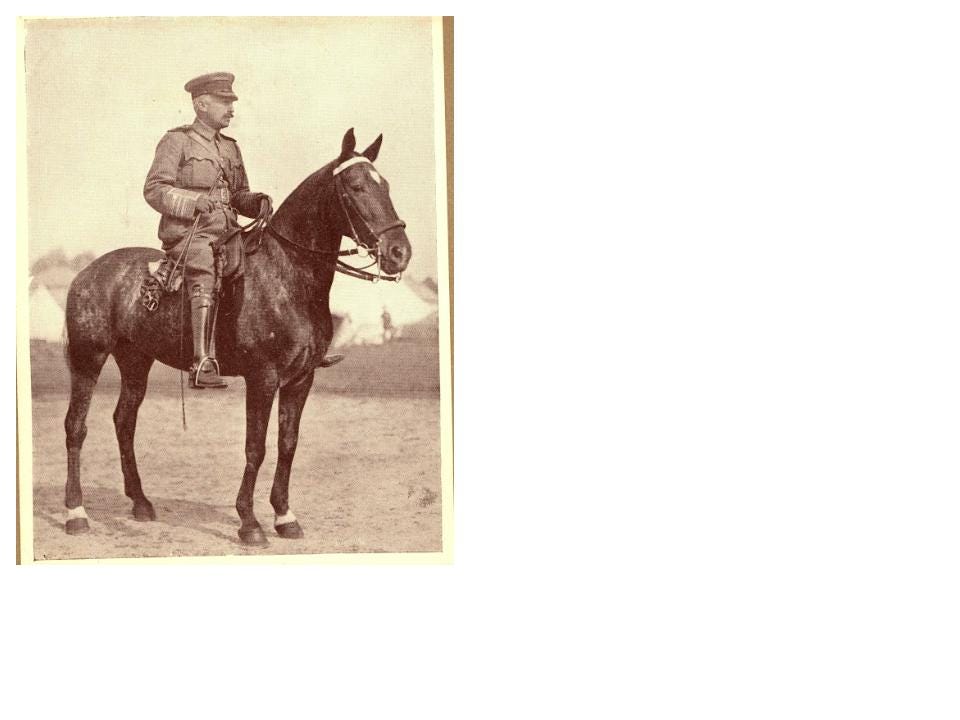
[Dictionary of Canadian Biography - in the process of publication]
Summary: From the intermarriage of several distinguished Nova Scotian families, Guy Carleton Jones (1864–1950) was a physician who worked for Canada’s quarantine service and served in its armed forces. He grew up in the company of talented sisters and cousins on a property in Halifax that later became the Waegwoltic Club. He deployed with the No. 10 Canadian Field Hospital to South Africa. He was a senior medical officer during the establishment of a permanent army medical service. Jones was Surgeon General during the First World War. He was one of several innocent casualties of a scandal known as the Canadian Army Medical Corps affair of 1916. It resulted in his premature return to Ottawa where he was involved in the response to the Spanish Influenza pandemic. He retired to Europe with his wife Susan Morrow, who was a successful author. Two years after Susan died, he married an Italian countessina, Ginevra Pia Mannini. They were interned in Italy during the Second World War where, as a retired Major General, he was the highest ranking Canadian in custody. Jones was a product of American loyalists who flourished in Canada but who returned to the United Kingdom, eight generations after their original emigration.
JONES, GUY CARLETON, physician and soldier; b. 28 Dec 1864 in Halifax, Nova Scotia, son of Alfred Gilpin Jones* and Margaret Stairs; m. first 30 Oct. 1889 Susan Morrow (1885-1926) in Halifax, N.S., and they had no children; m. secondly 28 July 1928 Ginevra Pia Mannini (1877–1942) in Alassio, Italy and they had no children; d. 23 Oct. 1950 in Edinburgh, Scotland.
sh: Family background and education
Guy Carleton Jones was named after his grandfather. His great-grandfather had come to Nova Scotia as part of the loyalist migration after the American War of Independence. The Jones family had lived near Boston since Jones’ great-times-8 grandfather Lewis Jones immigrated, before 1631, to Roxbury, Massachusetts from Wiltshire in England. Members of different generations of the family served in the colonial militia. An ancestor, Stephen Jones, was a captain in Col. Noble’s regiment when he was killed, on 7 Jan 1746 in Minas Nova Scotia, by French forces from Fort Beauséjour. Several of Jones’ siblings were named for members of their Massachusetts family. Jones’ great grandfather, also called Stephen Jones, named his son in honour of his commanding officer Guy Carleton*. At least four members of the extended family in Nova Scotia were named Guy Carleton Jones, of whom 3 lived contemporaneously.
At the time of Jones’ birth, his father was the long term bookkeeper and clerk for Thomas Clifford Kinnear, a merchant and shipowner. Seven years later, Alfred Jones became the sole proprietor of the business upon Kinnear’s retirement. Among his business colleagues were ship merchants William Machin Stairs* and Robert Morrow who founded the Union Bank (later merged to form the Royal Bank of Canada). There would be several intermarriages between the 3 families. Alfred Jones married Stairs’ daughter Margaret.
The family lived in “Bloomingdale”, a small estate overlooking the Northwest Arm in Halifax. Next door in “Bircham” lived Margaret’s sister, Helen, who had married Robert Morrow. The children of both families grew up together, forming life-long bonds. Their childhood appears to have been very happy with many of the privileges of elite Victorian life. They received a strong liberal education with an emphasis on the arts; four of the girls would become well known as writers and artists (Alice Jones*, Frances Jones Bannerman, Susan Morrow, and Helen Morrow Paske Duffus). Sports included skating and sailing. Among their prominent relatives were William James Stairs* (uncle), John Fitzwilliam Stairs* (a cousin, whose mother was Susanna Morrow) and the adventurer William Grant Stairs (a cousin, whose mother was Mary Morrow).
Alfred Jones was active as a conservative during the confederation controversy in Nova Scotia but switched to the liberal side during a 30 year political career. He served as federal Minister of the Militia and Defence. He became the 8th Lieutenant Governor of Nova Scotia in 1900.
Jones’ mother died when he was 10 years old. His father remarried 2 years later. In 1876, Jones was sent to boarding school, with his older brother Walter and cousin William Grant Stairs, at Merchiston Castle School in Edinburgh Scotland. Also attending Murchiston was Edward Duffus from Halifax, who would later marry his sister-in-law, Helen Morrow. Jones spent at least one year in Galt Collegiate Institute, Ontario in 1878 under headmaster William Tassie*. He appears to have returned to Edinburgh to complete his education. He attended King’s College London from 1883 until 1887. He was elected to the council of the medical society of KCL in his last year. He successfully challenged the membership examination of the Royal College of Surgeons of England in 1887 to become a physician. He was appointed as a physician accoucher’s assistant at King’s College Hospital in 1888. He returned to Canada and attended the Halifax Medical College, receiving the post-graduate medical degree M.D.,C.M. from King’s College, Windsor NS in 1897.
sh: Early years of practice
Jones set up his medical practice at 136 Hollis Street in Halifax. He was among ‘the young men’ recruited to the new Victoria General Hospital and teaching faculty of the Halifax Medical College. The King’s College Windsor yearbook lists him in the Department of Anatomy and Practical Anatomy. A history of the first 50 years of the medical school says that he gave courses in diseases of children. He was also secretary of the school.
In 1896, Jones secured a Federal position as assistant inspecting physician in the Department of Agriculture. This was the title given to quarantine officers. Superintendent, Frederick Montizambert* was modernizing Canadian quarantine stations including Lawlor’s Island where Jones served. On 27th of January 1899, a ship with 1998 Doukhobor immigrants arrived at Halifax with its yellow quarantine flag aloft. Montizambert boarded the vessel and diagnosed a case of smallpox. The passengers were led by Count Sergey Tolstoy, the author’s son. Montizambert and Jones joined the passengers in quarantine because of the magnitude of the task. Lawlor’s island was not equipped to house so many people in winter. A complicated process of vaccination, washing, fumigation and housing was started. Tolstoy found Montizambert autocratic but preferable to his “Grand Vizier” Jones. Despite several confrontations between Tolstoy and Jones, a good outcome was achieved. It was Jones' first experience of meeting a major logistic challenge.
sh: Foundation of the Canadian Army Medical Corps
In the early 1890s attempts were made to establish the St. John’s Ambulance Association in Nova Scotia. Jones trained a boys brigade to a point where they became the model for training others. The brigade made a demonstration for Sir Frederick Borden* in 1897. When Jones requested uniforms of the minister, the only mechanism available was to enlist the brigade in the militia. Thus the No. 1 (Halifax) Bearer Company of the Canadian Militia was formed. Jones, who had previously enlisted as a surgeon lieutenant of the No. 1 Regiment of Canadian Artillery, was promoted to surgeon captain of the Halifax company. The company volunteered en-masse for the Boer War being the only medical component of the first contingent. After Jones had left, the company was reconstituted as 1 Canadian Field Ambulance. During the First World War, 1 Canadian Field Ambulance ran the Cogswell Street Station Hospital and played a significant role in the medical response to the Halifax Explosion. In 1920, 1 Canadian Field Ambulance was renamed 22 Field Ambulance of the Royal Canadian Army Medical Corps.
Jones was sent to the Royal Army Medical Corps Depot at Aldershot in Britain for its field ambulance course in May 1899. Jones was promoted to major and appointed as 2 I/C (second in command) of the No. 10 Canadian Field Hospital which deployed to South Africa in the Boer War. The voyage from Canada in January 1902 and the set-up period in South Africa were marked by outbreaks of infectious diseases including smallpox and typhoid. Quarantine and destruction of infected bedding were used to control the outbreaks. A novel feature of the medical unit was the contribution of Canadian nurses, an experience that would inform later actions by Jones. The nurses were restricted to training orderlies and were to have no patient contact. This barrier was broken by the necessities of deployment. The field hospital group trekked across the Orange Free State to Valbank in the Transvaal, where a stationary hospital was established. A mobile unit under Jones was detached and sent with Gen. Walter Kitchener’s army. The unit cared for casualties at the Battle of Hart’s River, one of the bloodiest days of the war. Jones was mentioned in reports for his dedicated service as a surgeon and for his organizational abilities.
The Boer War convinced Canada to establish a permanent medical service in 1904 under the command of Col. Eugene Fiset, a highly decorated medical officer from the Boer War. Fiset promoted camp sanitation and hygiene in a campaign of disease prevention. In 1905, Jones was promoted to lieutenant colonel in the Permanent Army Medical Corps with responsibility as Principal Medical Officer for the Maritime Provinces. In 1906, Fiset was appointed Deputy Minister of Militia. Jones was promoted to colonel and appointed surgeon general with responsibility as director general of the Canadian Army Medical Corps. Jones continued Fiset’s campaign and succeeded in having a militia order issued in 1907 making cleanliness a matter of discipline and camp sanitation the responsibility of the commanding officer. There was only a very small cadre of part-time medical officers, who rarely met and never trained. Jones revived the Association of Medical Officers of the Militia in order to have academic meetings. One of his own contributions examined the role of infectious disease in the Balkan Wars of 1912-13. His words of warning regarding the spread of pestilence among civilians by armies at war are considered prophetic today regarding the influenza pandemic that occurred 4 years later. Jones organized Canada’s first all-ranks medical training camp in London Ontario in 1911. RAMC handbooks were modified for Canadian use, creating the protocols that would be used by CAMC in the First World War.
In a parallel development, Army nursing sisters were appointed in 1906 under command of a matron-in-chief who reported to Jones. He had served with Georgina Pope and Margaret Chisholm MacDonald, the first two matrons, in South Africa and knew them personally. Jones supported the development of nursing within CAMC, smoothing over issues such as areas of responsibility and lines of command. In contrast to the Boer War, Jones involved nurses in direct care of patients. The matrons credited Jones for the strength of their group by the time the First World War started.
Jones was in England in the Autumn of 1913 with the Minister of Militia and Defence, Col. Sam Hughes*. Jones took the opportunity to introduce the minister to Dr. William Leishman who was continuing Dr. Almroth Wright’s campaign of typhoid vaccination. Jones had seen how effective vaccination was in the Boer War even though it remained controversial within the British Army chain of command. Leishman came to Canada and helped Jones set up a decentralized capacity to vaccinate all of the Canadian forces. The success of this campaign became apparent early in the First World War so that the British Army adopted the system as well.
sh: First World War
Hughes decided that the Canadian Expeditionary Force would muster at the as yet unbuilt camp at Valcartier Quebec. Jones was appointed Director General Medical Services Overseas. He faced two immediate problems. The first was to prepare Valcartier to safely house a huge number of men and horses. The second was to deal with a huge influx of untrained individuals into the CAMC. Hughes supplied all the resources needed to build the camp quickly and Jones had very able assistance to design systems to supply safe drinking water, sanitation and medical care so that disease outbreaks were avoided. The medical units accompanying the first Canadian contingent included: 1 casualty clearing station; 3 field ambulances; 2 stationary hospitals (400 beds each) and 2 general hospitals (1000 beds each). Military regulations and CAMC protocols were promulgated among the medical units in order to instill discipline. Two groups were considered challenging: conscientious objectors and experienced civilian physicians. The reputation and treatment of stretcher bearers dramatically improved when their bravery was demonstrated in combat. The lack of discipline and respect for command from some physicians who came from successful civilian practices remained a problem throughout the war. Another task for medical services in Valcartier was to determine a soldier’s fitness to deploy. It was well organized but with such large numbers occasional inappropriate designations occurred requiring later repatriation.
Once overseas, 30,000 Canadian troops were scattered all over areas like Salisbury Plain, making care very difficult. Canada was repeatedly praised for its ability to contain outbreaks of infectious disease. Jones integrated easily into the Imperial command structure and he became well known to the French. The war office wanted to use allied resources efficiently. Jones agreed to receive casualties at Canadian hospitals, regardless of their country of origin. He also agreed to Canadian casualties being treated in British hospitals. Canadian medical units were deployed on every front including Belgium / France, Gallipoli and Salonika. The fact that the first Canadian unit to set foot in France was the No. 2 Canadian Stationary Hospital, which had been inspected by the King and Queen prior to departure, was a source of pride. Because of the overwhelming demand for medical services, Jones agreed to use civilian volunteers organized in groups known as Voluntary Aid Detachments and to accept the participation of organizations such as the Canadian Red Cross and St. John’s Ambulance in running hospitals. St. John’s Ambulance arranged for first aid training of every Canadian soldier - an early example of organized buddy care. Jones gave responsibility for recruitment, training and management of the nursing staff to Matron-in-chief Margaret MacDonald, who had an office in London next to his and a support staff of six. Jones facilitated specialized care of Canadian soldiers with shellshock by creating a specific hospital under the leadership of Capt. Colin Kerr Russel. All of these decisions would be criticized later, especially when he agreed to the deployment of the No. 4 Canadian General Hospital to Salonika where the Toronto contingent considered themselves isolated from the action.
sh: Canadian Army Medical Corps Affair of 1916
Tension continued to mount between Minister Hughes and the medical service overseas until he organized an irregular inquiry headed by Dr. Herbert Bruce, a prominent Toronto surgeon. Bruce’s target was the surgeon-general. Jones unsuccessfully appealed to Hughes and Bruce’s known sense of pageantry by bringing them on a tour of Canadian hospitals in England. The visitors included dignitaries such as the Duchess of Devonshire, to whom Susan Morrow Jones presented a huge bouquet of roses. Jones was recalled to Canada following Bruce’s damning report. Bruce was given Jones’ position even though he had little experience. He couldn’t cope with the enormity of the task. Public and private protests reached Primeminister Robert Borden* and the war office. The crisis worsened with the suicide of Dr. Charles Gorrell* who had been unfairly accused of misdeeds. Borden ordered a formal inquiry which repudiated Bruce’s criticisms, exonerated Jones and restored him to his position as director. Hughes was sidelined in government. Jones was given many foreign honours including Companion of the Order of St. Michael and St. George (CMG), Knight of Grace of the Order of St. John, Legion d'Honneur - Croix d'Officier and honorary fellowship of the American College of Surgeons. In contrast, Canadian authorities would have preferred his quiet retirement. He was brought back to Ottawa as inspector of hospitals in Canada, a specially created position.
sh: Influenza pandemic
Canada was unprepared for the Influenza pandemic of 1918. Montizambert was elderly but still in charge of public health. Influenza was not listed as an infection requiring quarantine. The first challenge came with the arrival in Halifax on 7th July 1918 of RMS Araguaya. There were 763 wounded soldiers on board, of whom 175 had contracted influenza. Montizambert was on vacation and could not be located. The quarantine officers believed they had no jurisdiction and wanted the soldiers and their medical teams to board trains for Montreal. Jones was contacted. He ordered that all crew, medical staff and passengers quarantine themselves on the ship. Two further incidents occurred in the St. Lawrence. The minister of agriculture, who was responsible for public health, was overwhelmed. Eventually Jones arranged with Montizambert for influenza to be listed as a notifiable disease. Quarantine procedures that had been used solely for entry to Canada were applied by local authorities to control internal spread of influenza.
Jones retired in 1920 without ceremony. He was given the position as honorary colonel of the Royal Canadian Army Medical Corps.
sh: Personal life and retirement
Jones married his next-door neighbour and first-cousin, Susan Morrow, in St. Stephen’s Church in Halifax. According to family descendants, they determined not to have children out of fear of consanguinity. Susan and her sister Helen were writers who shared pseudonyms, probably as a matter of private humour, that combined their first names with Carleton or Milicete. Milicete may have been inspired by a dressmaker in London, England whom they encountered as young travellers or from whom they ordered clothes. As a result, it is not known now who wrote what. Susan is considered the more prolific of the two but their published work resulted in a helpful income and a place in the history of Canadian letters. Jones considered Susan’s short stories to be superior. Jones’s sisters Alice and Frances were also published writers. Alice was well known as an early travel writer and was probably the most impressive of the four as a novelist. Frances was a prominent Canadian painter who was involved early with Impressionism. A poem of lament at the early death of her first husband was included in the Oxford Book of English Verse for most of the 20th century.
Upon his retirement from the Canadian Army, Jones and his wife Susan moved to Alassio on the Italian Riviera. Guy’s sister Frances had lived there since the early years of the century. Alice Jones had moved, upon the death of their father, to Menton which lay 85 Km west on the French Riviera. They visited each other frequently. Both Menton and Alassio were popular retreats for expatriate artists and writers. For example, William Butler Yeats frequented Menton, dying there in 1939, and Edward Elgar wrote a popular overture in Alassio. Ginevra and Georgina Mannini, daughters of Conte Octavio Mannini and Gertrude Swayne, published an English language newspaper for the expatriate community in Alassio. When they were in England, Guy and Susan may have stayed with Helen in London. Susan and Helen continued to publish novels during this period. Bloomingdale was sold in 1908 to a club for family outdoor recreation. It was renamed the Waegwoltic Club in 1910 and remains in operation today, at the original Jones house and grounds.
Jones became involved with the Anglo-Catholic movement. He was listed as the treasurer of the Catholic Mission Society at a convention of Anglo-Catholic priests in July 1921. Susan died in 1926 in London. Two years later Jones married Ginevra Mannini in the Anglican church in Alassio. Their celebrant was Rev. Maurice Child, a prominent Anglo-Catholic priest. They lived in Villa Gertrude in Alassio. They stayed with Georgina, Ginevra’s younger sister, and her husband Eustace Mansel in Chinnor Hill, Oxfordshire when in England. Alice Jones died in Menton in 1933. Helen Morrow Paske Duffus died in London in 1936. Frances continued to live in Alassio where she became known for animal protection.
Declaration of the Second World War broke this idyll. On the 18th of December 1939, Jones wrote a note of support from Alassio to the director general of the Royal Canadian Army Medical Corps. Signing as the honorary colonel of the corps, Jones said that he expected its burden to be heavier this time. Frances hastily left Alassio for England. Jones wrote again from Alassio on the 6th of January 1940 donating 5% of his pension to Canada’s war fund. He remarked that the situation in Italy had deteriorated because of sanctions and fascist propaganda. Guy and Ginevra were interned as enemy aliens. Jones was the most senior Canadian military officer, albeit retired, in enemy custody at the time. Records in Ottawa indicate that the Government of Canada facilitated Jones by paying his pension so that he could receive it through the American embassy in Rome while they lived on parole in Neri, Viterbo. Ginevra’s illness may have been the reason why they could not leave with Frances. She died in Fiesole, near Florence, on 2nd July 1942, leaving all her property to her brother, sister and nephew. Jones almost certainly lost all of his papers and belongings. It is not known for certain how Jones escaped from Italy. Records in the Italian government archives suggest his internment ended in 1943. Letters that he wrote to Ottawa state that he left Italy for Portugal in January. The family believed that the International Red Cross facilitated his passage via Portugal to the United Kingdom, where he arrived in February.
Jones retired to Edinburgh, which he had known as a young man. He lived in a modest house at 34 Plewlands Gardens and died there in 1950. The funeral took place in Old St. Paul’s, a centre of Anglo-Catholicism in Edinburgh, with the remains being cremated. His nephew Maj. Edward Lake Paske, Helen Morrow’s son, was listed as the only mourner. There is no record of any notice or event in Canada to celebrate his life or his career.
Vivian McAlister
Bibiography:
Background on Jones’ loyalist roots is available in Some of the Descendants of Lewis and Ann Jones of Roxbury Mass by William Blake Trask (1878 Gunn Bliss and Co. Boston) and Biographical Sketches of Loyalists of the American Revolution by Lorenzo Sabine (1864 Little, Brown and co. Boston). Jones’ immediate family and his relatives who were also called Guy Carleton Jones are recorded in Census of Canada 1871, 1881, 1891 and 1901.
Information regarding his childhood and the writing careers of his sisters and cousins is given in Fiction Treasures by Maritime Writers: Best-selling Novelists of Canada's Maritime Provinces 1860-1950 edited by Gwendolyn Davies (2015, Formac Publishing House) and in Art, Fiction and Adventure: The Jones Sisters of Halifax by Gwendolyn Davies (2002, Journal of the Royal Nova Scotia Historical Society; 5: 1-22). Material regarding Jones’ role in the Halifax Medical College is given in The Halifax Medical College, 1875-1911 by H.L. Scammell (1958, Dalhousie Medical Journal; 11(1): 12-17); Presidential Address by L.R. Morse (1928, NSMB; 7(11): 483-495) and Noble Goals, Dedicated Doctors: The Story of Dalhousie Medical School by Jock Murray (2017, Nimbus Publishing Company, Halifax 2017 ISBN:9781771085298). Jones’ role in the Boer War and in the early days of the Army medical service is outlined in: The Story of First Aid in Nova Scotia by Lieut Colonel Edgar Mingo V.D. 1941, NSMB; 20(3): 107-111; Notes by the way by S.L. Walker (1926, NSMB; 5(6): 12-18; and War Diary of the No. 10 Canadian Field Hospital in the Boer War 1902. Both the Official history of the Canadian Forces in the Great War 1914 – 1919 by Andrew McPhail (1925, The Medical Services. Ottawa ON: Department of National Defence) and War Story of the Canadian Army Medical Corps by George Adami (1918, Canadian War Records Office, Ottawa) outline his role in the formation of CAMC and his experiences in the Boer War and First World War. The story of nursing in the Canadian Army is given in Margaret Macdonald: Imperial Daughter by Susan Mann (2010, McGill-Queen’s University Press. ISBN 9780773538009) and The Island’s Florence Nightingale by Boyde Beck and Adele Townshend. (1993, The island; 34: 1-6). Jones published 2 papers: Marching (1913 Can Med Assoc J; 3(4): 288-90) and The importance of the Balkan Wars to the medical profession of Canada (1914, Can Med Assoc J; 4(9):799-802). Jones appended a Report of Medical Services for the year ending 31st March to the Annual Report to the Militia Council (1906-14, Canada Sessional papers). Library and Archives Canada have extensive files on Jones’ career (list available). The following articles have information related to episodes in their title: Sergey Tolstoy and The Doukhobors: The Halifax Quarantine by Ian Cameron (2006, CMAJ; 174(11): 1600-1602); The Canadian Army Medical Corps affair of 1916 and Surgeon General Guy Carleton Jones by Maj-Gen Jean-Robert Bernier and Lt-Col Vivian McAlister (2018, Can J Surg; 61(2): 85–87) and The last plague by Mark Osborne Humphries (2013, University of Toronto Press). Information regarding the family was given by Mrs. Anne Joudry, niece of Guy Carleton Jones, to Dr. Gwendolyn Davies.
Acknowledgement: My thanks to Kari Harrison BScN who assisted by researching files in LAC and NS Archives; to Dr. Gwen Davies and Dianne O’Neill for sharing their own research files; and to Jared Warren (Guelph Collegiate Vocational Institute), Janet Hathaway (University of King’s College Halifax), Philip Rossiter (Merchiston Castle School) and Heather Strickey (King's Edgehill School) for searching their institute’s files.